

5 Landscape Lighting Mistakes Zanesville Homeowners Make (And How to Avoid Them)
When the sun sets over the Muskingum River and your outdoor space fades into darkness, you’re missing out on hours of potential enjoyment in your yard. Professional landscape lighting can transform your Zanesville property into a stunning evening showcase while improving safety and security. However, many homeowners make critical errors when installing landscape lighting that diminish its effectiveness and visual appeal.
At C.P.’s Landscape & Outdoor Supply, we’ve spent over 30 years helping Zanesville and Cambridge area homeowners create beautiful outdoor spaces. Through countless landscape lighting projects, we’ve seen the same mistakes repeated time and again. The good news? These errors are entirely preventable when you know what to look for.
In this comprehensive guide, we’ll walk you through the five most common landscape lighting mistakes we encounter in Zanesville properties and provide expert solutions to help you avoid them. Whether you’re planning a DIY installation or considering professional outdoor lighting services, understanding these pitfalls will save you time, money, and frustration.
Mistake #1: Over-Lighting Your Property (The Airport Runway Effect)
One of the most frequent landscape lighting errors we see in Zanesville yards is using too many fixtures or lights that are excessively bright. Homeowners often fall into the trap of thinking “more is better,” but this approach typically creates an unwelcoming, harsh environment that looks more like an airport runway than an elegant outdoor space.
Why This Happens
The instinct to over-light comes from a desire to make every corner of your property visible at night. Many homeowners worry about safety and security, leading them to install rows of path lights spaced just inches apart or floodlights that illuminate the entire yard with stadium-like intensity. Box store lighting kits often encourage this problem by including excessive fixtures that homeowners feel obligated to use.
The Problems With Over-Lighting
Excessive outdoor lighting creates several issues:
- Loss of ambiance and mystery: Landscape lighting should create depth through contrasts between light and shadow. When everything is brightly lit, your yard loses its nighttime character and appears flat and uninviting.
- Light pollution: Over-lighting disturbs neighbors, obscures starlight, and can disrupt local wildlife patterns, including beneficial insects and birds.
- Wasted energy and higher bills: More lights mean higher electricity costs every month, especially if you’re not using energy-efficient LED fixtures.
- Visual fatigue: Overly bright lighting causes glare that makes it harder to see and creates an uncomfortable viewing experience for guests.
The Solution
Think of moonlight as your guide. A full moon produces only about 0.01 foot-candles of light, yet it beautifully illuminates outdoor spaces. Your landscape lighting should aim for a similar soft, subtle effect. Here’s how:
Start minimal and add gradually: Begin with fewer fixtures focused on key features like your front entrance, important walkways, and one or two focal points such as specimen trees or architectural elements. You can always add more lights later if needed.
Use proper fixture placement: For pathways, install lights in a zigzag pattern, alternating from side to side rather than lining them up in straight rows. For curved paths, follow the natural curve of the walkway. This creates visual interest while providing adequate illumination without the runway effect.
Choose appropriate wattage: For LED landscape lighting, use no more than 20 watts equivalent for ambient lighting and 35 watts for accent or feature lighting. Remember that LED lights are significantly brighter than their traditional counterparts, so what seems dim indoors may be perfectly adequate outdoors.
Layer your lighting: Create depth by using different light levels for different purposes. Background lighting should be subtle, pathway lighting functional but gentle, and accent lighting slightly brighter to draw attention to specific features.
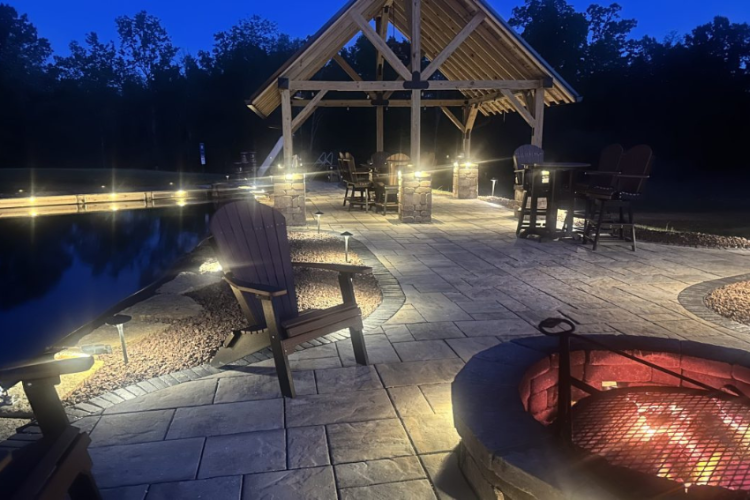
Mistake #2: Using Low-Quality Fixtures That Won’t Survive Ohio Winters
Zanesville’s climate presents unique challenges for landscape lighting. With average winter temperatures dropping to 22°F and frequent freeze-thaw cycles, our Zone 6a conditions can quickly destroy substandard lighting fixtures. Yet many homeowners opt for inexpensive, low-quality products from big box stores, only to find themselves replacing failed fixtures within a year or two.
The Hidden Costs of Cheap Fixtures
Those solar-powered plastic lights might seem like a bargain at first, but they rarely last through a single Zanesville winter. The problems include:
- Material degradation: Plastic and aluminum fixtures crack, rust, and deteriorate when exposed to our humid summers and harsh winters.
- Poor water resistance: Inadequate seals allow moisture to penetrate connections, causing corrosion and electrical failures.
- Weak light output: Cheap fixtures often produce insufficient light and fade quickly over time.
- Constant replacement: The ongoing cost of replacing failed fixtures far exceeds the initial savings.
Ohio Weather and Your Lighting Investment
Zanesville experiences significant weather extremes that test outdoor fixtures. Our summers bring high humidity and temperatures reaching the mid-80s, while winters deliver snow, ice, and temperature swings that cause repeated freezing and thawing. These conditions demand lighting fixtures built to professional standards.
The Solution
Invest in professional-grade landscape lighting fixtures designed to withstand harsh outdoor conditions. Here’s what to look for:
Choose durable materials: Solid brass or copper fixtures will last a lifetime, even in challenging weather conditions. These materials develop a natural patina over time but maintain their structural integrity and function. Avoid aluminum, plastic, or composite materials for permanent installations.
Verify weatherproofing ratings: Look for fixtures rated IP65 or higher for exposed locations. This rating ensures protection against dust and water jets from any direction. All connections should use waterproof direct burial splices, not standard wire nuts that allow moisture intrusion.
Select LED technology: While LED bulbs cost more initially, they last up to 25 times longer than incandescent bulbs and use significantly less electricity. LED landscape lights also perform better in cold weather and maintain consistent color temperature.
Consider warranty protection: Quality professional-grade lighting systems often come with warranties of 10-15 years or more. This protection gives you peace of mind and confirms the manufacturer’s confidence in their product’s durability.
Plan for snow removal and lawn maintenance: Position lights in garden beds rather than in turf areas where they’re vulnerable to snow blowers, lawn mowers, and weed trimmers. Use in-ground well lights when illumination is needed in lawn areas.
Mistake #3: Creating Direct Glare Instead of Subtle Illumination
Walk through many Zanesville neighborhoods at night, and you’ll notice a common problem: visible light bulbs creating uncomfortable glare rather than beautiful illumination. This mistake occurs when homeowners install fixtures without considering sight lines and proper positioning, resulting in lights that blind rather than beautify.
Understanding the Glare Problem
Direct glare happens when the light source itself is visible to viewers, either from the street, neighboring properties, or within your own outdoor living spaces. Instead of seeing the intended illuminated features—your beautiful stone wall, mature oak tree, or architectural details—people see bright spots that hurt their eyes and obscure everything else.
This issue commonly occurs with:
- Path lights placed too close to driveways where headlights or passengers see the bulbs directly
- Uplights positioned in open areas where they’re visible rather than concealed
- Spotlights aimed at the wrong angle, creating reflective glare off windows
- Solar lights stuck randomly in lawns with no thought to viewing angles
Why Proper Positioning Matters
The goal of professional landscape lighting is to see the illumination effect, not the light source itself. When fixtures are properly positioned and concealed, they create a magical, almost mysterious quality where light seems to appear naturally, highlighting your property’s best features without revealing the mechanism.
The Solution
Strategic fixture placement transforms harsh glare into elegant illumination:
Hide your fixtures: Position lights behind landscape elements such as shrubs, groundcover, rocks, or architectural features. Well lights can be recessed into turf or hardscaping. The fixture itself should be virtually invisible during the day and the bulb should never be directly visible at night.
Consider viewing angles: Before permanently installing any fixture, test it after dark from multiple vantage points—from the street, from neighboring properties, from your windows, and from outdoor living areas. If you can see the bulb directly from any common viewing angle, reposition the fixture.
Use appropriate beam angles: Different applications require different beam spreads. Narrow beam angles (around 15-25 degrees) work well for tall trees and architectural uplighting. Medium beams (35-45 degrees) suit most general applications. Wide beams (60 degrees or more) are ideal for washing walls or illuminating broad landscape beds.
Install fixtures at proper distances: Position spotlights and uplights at appropriate distances from their targets. Generally, the fixture should be placed about as far from the object as the object is tall, though this varies based on the desired effect and fixture specifications.
Add shields and directional controls: Many quality fixtures include adjustable shrouds or shields that prevent light spill in unwanted directions. Use these controls to direct light precisely where it’s needed while blocking glare.
Match fixture type to application: Spotlights accent individual objects, floodlights illuminate broad areas, well lights hide in hardscapes and lawns, path lights provide safe walkway illumination, and downlights mounted from above create pools of light below. Using the wrong fixture type for a specific application almost always creates problems.
Mistake #4: Ignoring Balance and Design Cohesion
Many homeowners approach landscape lighting as a series of individual decisions rather than as a comprehensive design. They light the front walkway one year, add a spotlight on a tree the next, and gradually accumulate fixtures without an overall vision. The result is a disjointed, unbalanced lighting scheme that fails to showcase the property effectively.
The Importance of Balanced Lighting Design
Professional landscape lighting creates visual harmony across your entire property. This means considering how different illuminated areas relate to each other and ensuring that lighting intensity, color temperature, and fixture style work together cohesively.
Common Balance Problems
We frequently see these issues in Zanesville landscapes:
- Uneven illumination: The left side of a front yard is brightly lit while the right side remains dark, creating an uncomfortable asymmetry.
- Inconsistent techniques: Trees are uplighted on one side of the property but not the other, or architectural columns are lit differently from one to the next.
- Mismatched color temperatures: Some fixtures produce warm white light while others cast a cool blue tone, creating a jarring visual conflict.
- Spotty coverage: Important areas remain unlit while less significant features are emphasized.
The Solution
Think of your landscape lighting as a complete design rather than individual fixtures:
Create symmetry where appropriate: If you light architectural features like columns, pergolas, or both sides of an entrance, use identical techniques and fixtures. Both sides of your front yard should have similar levels and styles of illumination when viewed from the street.
Develop lighting zones: Divide your property into functional areas—entry zone, pathway zone, outdoor living zone, perimeter zone—and design lighting appropriate to each zone’s purpose. Front yard lighting typically emphasizes curb appeal and safe entry, while backyard lighting focuses on extending living space and highlighting water features or specimen plants.
Maintain consistent color temperature: All your landscape lighting should use the same color temperature, typically between 2700K and 3000K for architectural and general lighting. This creates a warm, inviting glow that complements most home exteriors. Tree lighting might go slightly warmer (up to 3500K) depending on the species and your preferences, but maintain consistency across similar applications.
Consider seasonal changes: Zanesville’s dramatic seasonal transformations affect how landscape lighting appears. Deciduous trees that look stunning uplighted in summer may need different fixtures or lamp adjustments when bare in winter. Perennial beds that glow beautifully in July disappear by November. Plan your lighting design to work year-round.
Integrate with hardscaping and landscape features: Your lighting should complement existing landscape elements. If you have beautiful stone retaining walls, hardscaped patios, or water features, incorporate these into your lighting design. At C.P.’s Landscape & Outdoor Supply, we often design hardscaping and lighting together to ensure perfect integration.
Plan for growth: Young trees and immature plantings require different lighting than established landscapes. Use adjustable fixtures that can be repositioned as plants grow, or plan to update fixtures as your landscape matures.

Mistake #5: Neglecting Proper Electrical Installation and Technical Requirements
Perhaps the most serious mistake homeowners make is improper electrical installation. This isn’t just about aesthetics—faulty wiring and incorrect transformer sizing can create safety hazards, cause system failures, and lead to expensive repairs. Unfortunately, many DIY installations and even some “professional” jobs cut corners on the technical requirements that ensure reliable, safe operation.
Critical Technical Mistakes to Avoid
Undersized transformers: Every landscape lighting system requires a transformer to convert standard 120-volt household current to the 12-volt low-voltage current used by most landscape lights. Each transformer has a maximum capacity measured in watts. Overloading a transformer by connecting too many fixtures causes lights to dim, creates potential fire hazards, and leads to premature system failure. For larger properties or complex designs, multiple transformers may be necessary to handle the load.
Voltage drop problems: Low-voltage current loses power over distance, especially when many lights share the same wire run. This phenomenon, called voltage drop, causes fixtures at the end of a circuit to appear noticeably dimmer than those near the transformer. Runs longer than 100 feet or circuits with more than 10 lights require careful planning, larger gauge wire, and possibly multiple transformer locations. Using a voltmeter during installation helps identify and correct voltage drop issues before they become problems.
Poor wire connections: Underground wiring faces constant exposure to moisture, soil pressure, and temperature extremes. Using inadequate connectors guarantees eventual failure. Standard wire nuts buried underground will corrode and fail. “Pierce point” connectors that puncture wire insulation create entry points for moisture. Only waterproof direct burial splices filled with protective gel should be used for landscape lighting connections. Every splice point should be properly sealed and protected.
Ignoring safety codes and permits: While low-voltage landscape lighting doesn’t require the same licensing as standard electrical work in most areas, it still must meet local codes and safety standards. Buried wires should be placed at appropriate depths (typically 6 inches minimum) and protected by conduit when necessary. Transformers must be properly grounded and mounted according to manufacturer specifications.
The Solution for Technical Excellence
For reliable, long-lasting landscape lighting, technical excellence matters as much as design:
Professional assessment: Before beginning installation, have a qualified professional assess your property’s electrical capacity, plan appropriate transformer locations, and design wire runs that minimize voltage drop while providing adequate power to all fixtures.
Use quality electrical components: Invest in commercial-grade transformers with appropriate capacity for your system plus 20-25% extra capacity for future expansion. Purchase only properly rated direct burial cable—14-gauge or heavier for most applications—and use waterproof gel-filled wire connectors at every splice.
Install with precision: Measure voltage at multiple points in the system during installation to verify proper power delivery to all fixtures. Bury wires at appropriate depths and protect them with conduit in areas where digging might occur in the future. Keep detailed records of wire paths and connection locations for future reference.
Consider smart controls: Modern landscape lighting systems can include timers, photocells, and even smartphone-controlled systems that allow you to adjust timing, dimming, and individual fixture control. These features maximize energy efficiency and give you complete control over your outdoor lighting environment.
Plan for maintenance: Even the best systems require occasional attention. Fixtures may need repositioning as plants grow, bulbs eventually need replacement (though LED bulbs last many years), and connections should be periodically inspected. Professional systems typically include maintenance plans that keep everything operating optimally.
The Zanesville Advantage: Professional Landscape Lighting That Performs
Zanesville’s unique climate and landscape characteristics demand lighting solutions that understand our local environment. From our clay-heavy soils and frequent rainfall to our cold winters and humid summers, every aspect of your landscape lighting installation must account for these regional factors.
At C.P.’s Landscape & Outdoor Supply, we’ve been creating beautiful, functional outdoor spaces for Zanesville and Cambridge area homeowners for over three decades. Our experience with local conditions means we understand exactly what works—and what doesn’t—in our climate zone.
What Professional Installation Provides
When you work with experienced landscape lighting professionals, you receive:
- Customized design that highlights your property’s best features while addressing your specific needs for safety, security, and aesthetic appeal
- Quality materials built to withstand Ohio weather extremes, backed by substantial warranties
- Technical expertise ensuring proper electrical installation, adequate transformer capacity, and reliable long-term performance
- Integrated approach that coordinates lighting with your existing or planned hardscaping, plantings, and water features
- Ongoing support including maintenance, adjustments as plants grow, and system expansion when desired
Beyond Lighting: Complete Outdoor Living Solutions
Landscape lighting is just one element of creating an exceptional outdoor environment. At C.P.’s Landscape & Outdoor Supply, we offer comprehensive services including:
- Premium landscape supplies: mulch, river rock, sand, topsoil, and decorative stone
- Professional lawn care and maintenance services
- Custom hardscaping: patios, walkways, retaining walls
- Drainage solutions that protect your landscape investment
- Water features that become stunning focal points at night when properly lit
- Plantings and flower beds designed for year-round beauty
When these elements work together cohesively, your outdoor space becomes a true extension of your home—a place where you want to spend time both day and night.
Making the Right Choice for Your Property
Avoiding these five common landscape lighting mistakes ensures your investment delivers lasting value and beauty. Whether you’re planning a complete outdoor transformation or simply want to enhance your property’s evening appearance, understanding these principles guides you toward success.
Remember that landscape lighting is both an art and a science. The artistic elements—choosing what to illuminate, creating visual balance, and establishing the right ambiance—combine with technical requirements like proper electrical installation and weather-resistant components to deliver systems that perform flawlessly for years.
Transform Your Zanesville Landscape With Professional Lighting
Ready to see your property in a whole new light? Don’t let common mistakes diminish your investment or create frustrating problems down the road.
Contact CP’s Landscaping & Outdoor Supply today to schedule your free landscape lighting consultation. Or call us directly for immediate assistance and advice. Our experienced team will assess your property, discuss your goals, and design a custom lighting solution that enhances your outdoor space while avoiding the pitfalls that plague amateur installations.